
Ask a client why they’ve stayed with their advisor for twenty years and the first thing they’ll say is that the advisor does a great job. But press a little, and the real reason comes out, and it’s almost never the returns. It’s something softer and harder to measure, like “She really gets me,” or “He actually listens.” That second answer is the one that holds the relationship together. Feeling understood is the quiet force most advisors assume just happens naturally when they care enough. It doesn’t. Feeling understood is something you create on purpose, and there are two sentences that create it more reliably than anything else I know.
I spent more than four decades in this business, including the years that earned a spot on Barron’s Top 1,200 advisor list and the experience of building my own firm before selling it in 2021. In all that time, the moments that cemented my best client relationships were rarely the moments I delivered brilliant advice. They were the moments a client looked at me, a little surprised, and said, “Yes. That’s exactly it.” That look is the goal. Let me show you the two sentences that produce it, and why they work.
Hearing Is Not the Same as Being Heard
Picture a client describing a fear they’ve never said out loud, that after forty years of building a business they have no idea who they’ll be once they stop. You listen carefully, you nod, and then you do what most of us are trained to do. You jump to the solution, walking them through the transition plan and the income strategy. Everything you say is correct, and the client still leaves feeling vaguely unsatisfied, because you heard their words but you never showed them you understood. Hearing happens in your ears. Being heard happens in the client’s chest, when they feel the words actually landed in another human being.
That gap is wider than most advisors realize. Analysis of nearly ten thousand recorded advisor-client meetings by Jump AI found that advisors spoke more than their clients in 84 percent of them, while 87 percent of advisors believed the reverse was true. We are convinced we’re listening, and the recordings show we’re mostly talking. Closing that gap doesn’t require talking less for its own sake. It requires proving you understood, and proof is something you have to say out loud.
Hearing happens in your ears. Being heard happens in the client’s chest.
The First Sentence: Give Them Their Own Words Back
The first sentence sounds almost too simple to matter. After a client shares something important, you reflect it back to them using their exact words, not your polished translation of those words. If a client says they want a “comfortable retirement,” you don’t respond with “So you’re targeting a sustainable withdrawal strategy.” You say, “When you say a comfortable retirement, tell me what comfortable looks like to you.” You hand their own language back to them, because the moment you paraphrase, you’re interpreting, and interpreting is where understanding quietly goes wrong.
Let me tell you how I learned this the hard way. One week years ago, I had three separate client meetings, and in every one the client used the word conservative. The first said they wanted to be more conservative with their investments, and they meant moving from seventy percent equities down to fifty. The second wanted to be more conservative with their spending, and they meant cutting discretionary expenses to save harder. The third said they were conservative people, and they simply meant they disliked complexity and wanted strategies they could understand. Same word, three different meanings. If I’d assumed I knew what conservative meant and skipped the reflection, I’d have given wrong advice to at least two of them and never known it.
This is why giving clients their own words back is so powerful. Words like comfortable, soon, enough, and secure feel clear when you hear them, but they’re loaded with private meaning. A comfortable retirement is eighty thousand dollars a year to one client and two hundred thousand to another. Soon is six months to one person and two years to the next. When you reflect the exact word back and ask what it means to them, two things happen at once. You protect yourself from an expensive misunderstanding, and you signal to the client that their specific words mattered enough for you to hold them carefully rather than rush past them.
The Second Sentence: Say What You Understood, Then Check
The first sentence catches the individual words. The second catches the whole meaning, and it begins with a short phrase that changes the temperature of any conversation: “Let me make sure I understand.” After a client shares something significant, you summarize what you heard, this time in your own words, capturing not just the facts but the feeling underneath, and then you check whether you got it right. It sounds like this. “Let me make sure I understand. You’re proud of what you built, and the money side is handled, but what’s really weighing on you is who you’ll be once the business isn’t yours anymore. Did I hear you correctly?” The closing question can take a few forms, like “Did I hear you correctly?” or “Did I capture that?”, and the first has a quiet advantage, because the word hear tells the client outright that you were listening to be heard, not just to reply.
Notice what that question at the end does. It hands the client the power to correct you, and that single act of humility is what makes the technique work rather than backfire. If you got it right, the client feels a wave of relief, the sense that someone finally sees the real issue, and they’ll often say “yes, exactly” with visible emotion. If you got it slightly wrong, they’ll fix it, and that correction is a gift, because now you understand something you would otherwise have built an entire plan around incorrectly. Either way you win, and either way the client feels heard. There is no version of asking “did I get that right” that makes a client feel less understood.
The order matters, too. You give them their own words first, then your understanding second, because the sequence walks the client from the comfort of their own language into the deeper meaning you’ve drawn out, and lets them confirm every step. Most advisors skip straight to advice. The ones who feel different to work with pause here, at the reflection, and let the client feel the words land before a single recommendation is made.
There is no version of asking “did I get that right” that makes a client feel less understood.
Why This Is the Whole Game
It’s tempting to treat reflection as a soft skill, a nice touch on top of the real work of planning. That gets it backwards. Feeling understood is not the garnish, it’s the foundation, because a client who feels understood tells you the truth, follows your advice, refers their friends, and stays through the market storms that send less-connected clients running. A client who feels processed rather than understood keeps you at arm’s length, hedges what they share, and quietly shops for someone who seems to care more. The reflection is what converts a transaction into a relationship.
Think of it like a tuning fork. When you reflect a client’s meaning back accurately, something resonates, and they feel it physically, a kind of internal click that says this person is on my wavelength. You can watch it happen. They lean in, their shoulders drop, their voice softens. That resonance is the beginning of trust, and trust is the thing every other part of your work depends on. You cannot skip to it. You earn it, one reflected sentence at a time.
The One Thing AI Will Never Do for You
Here is where the human advisor stays irreplaceable. AI can transcribe a client meeting perfectly and even flag the phrases a client used. A note-taking tool will capture that your client called something her “just-in-case money,” and it might even suggest dropping that phrase into your follow-up email. But the software doesn’t know why those words matter to her, the fear that produced them, or the relief on her face when you showed her she finally understood what she had. It captured the words without understanding them, and a client can feel the difference between a phrase you remembered because it mattered and a phrase a system pulled and pasted.
Reflection that lands requires a human who chose to listen, caught the emotion, and decided in the moment what to reflect and how to frame it. That judgment, knowing which words carry the weight and which moment is right to hand them back, cannot be automated, because it depends on caring about this specific person. In a world racing to automate every interaction, the advisor who can make a client feel truly understood holds the one advantage no tool will ever copy.
Your One Takeaway This Week: Reflect Before You Advise
In your next three client meetings, do not offer a single recommendation until you have reflected back what you heard. Use both sentences in order. First, catch a key word and hand it back: “When you said [their exact word], what does that mean to you?” Then, before you advise, summarize the whole meaning and check it: “Let me make sure I understand. What I’m hearing is… Did I hear you correctly?” Watch the client’s body when you get it right. That lean-in, that softening, is the sound of a client deciding to trust you.
The Bottom Line
Clients do not stay because your plan was flawless. They stay because of how you made them feel, and what they want most is to feel heard and understood. Two sentences get you there more reliably than any amount of expertise, and neither one requires you to be smarter, only more present. Hand clients their own words back, then reflect the meaning and check that you got it right, and you give them something most people in their lives rarely offer them, which is the experience of being completely understood.
Master those two sentences and you stop being an advisor clients merely keep and become one they refer, advocate for, and never leave.
Ready to become the advisor no machine can replace?
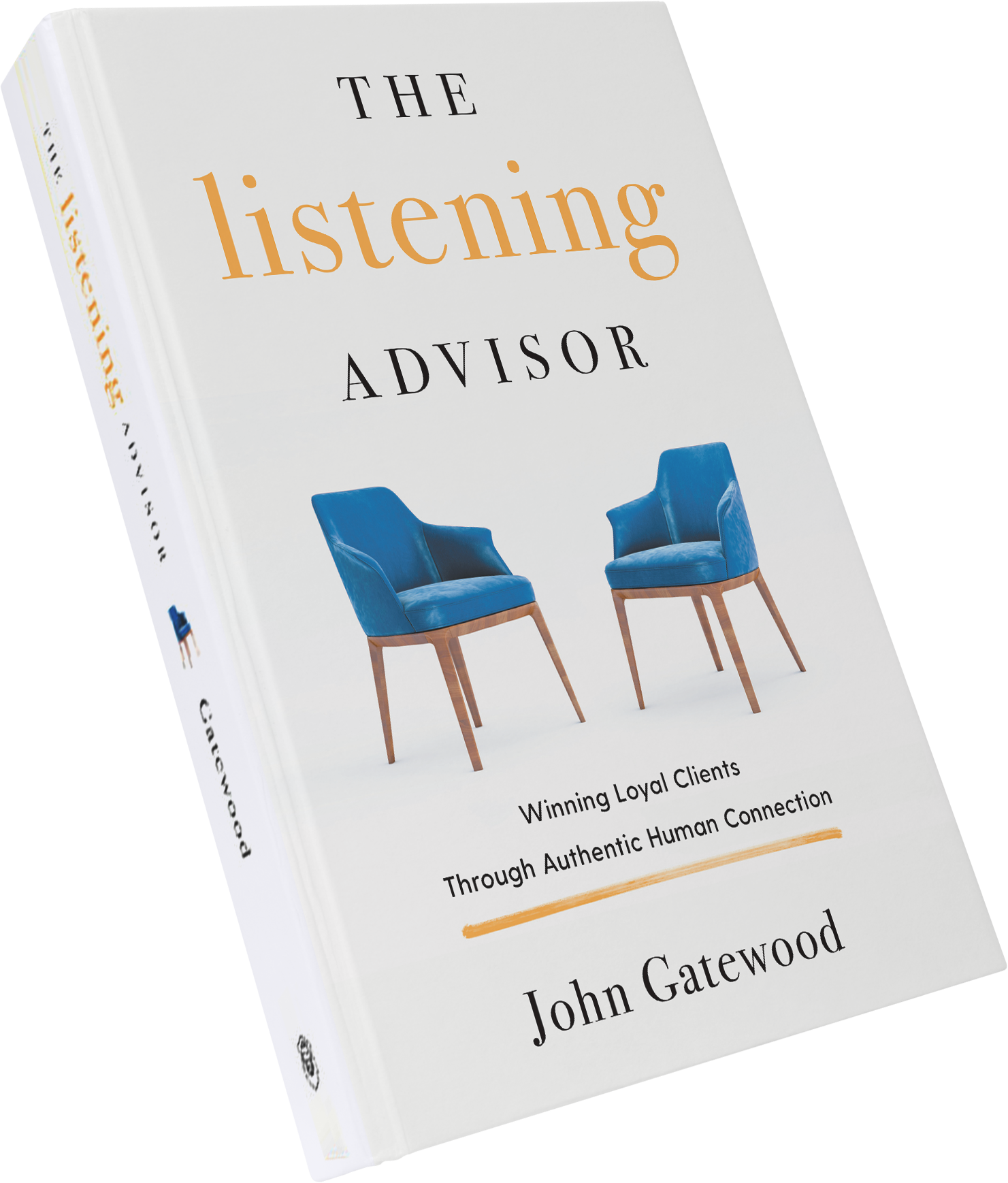
Pick up a copy of The Listening Advisor, or reach out to learn how The Listening Advisor™ can help you grow your AUM, deepen client relationships, and win clients who refer, advocate, and never leave.
John Gatewood is a CERTIFIED FINANCIAL PLANNER™ professional with forty-five years in financial services and the author of The Listening Advisor: Winning Loyal Clients Through Authentic Human Connection.