
After forty-five years across the table from clients, I’m convinced of one thing about this profession. Most of what determines whether a client stays with you is invisible from the inside. The advisor can’t see the gap between how they think the meeting went and how it actually felt to the client, and they can’t see the behaviors that produced the unsolicited referral or the ones that quietly caused the client to start looking around. The work that determines whether a client stays or leaves happens out of sight, in the quiet experience of the client.
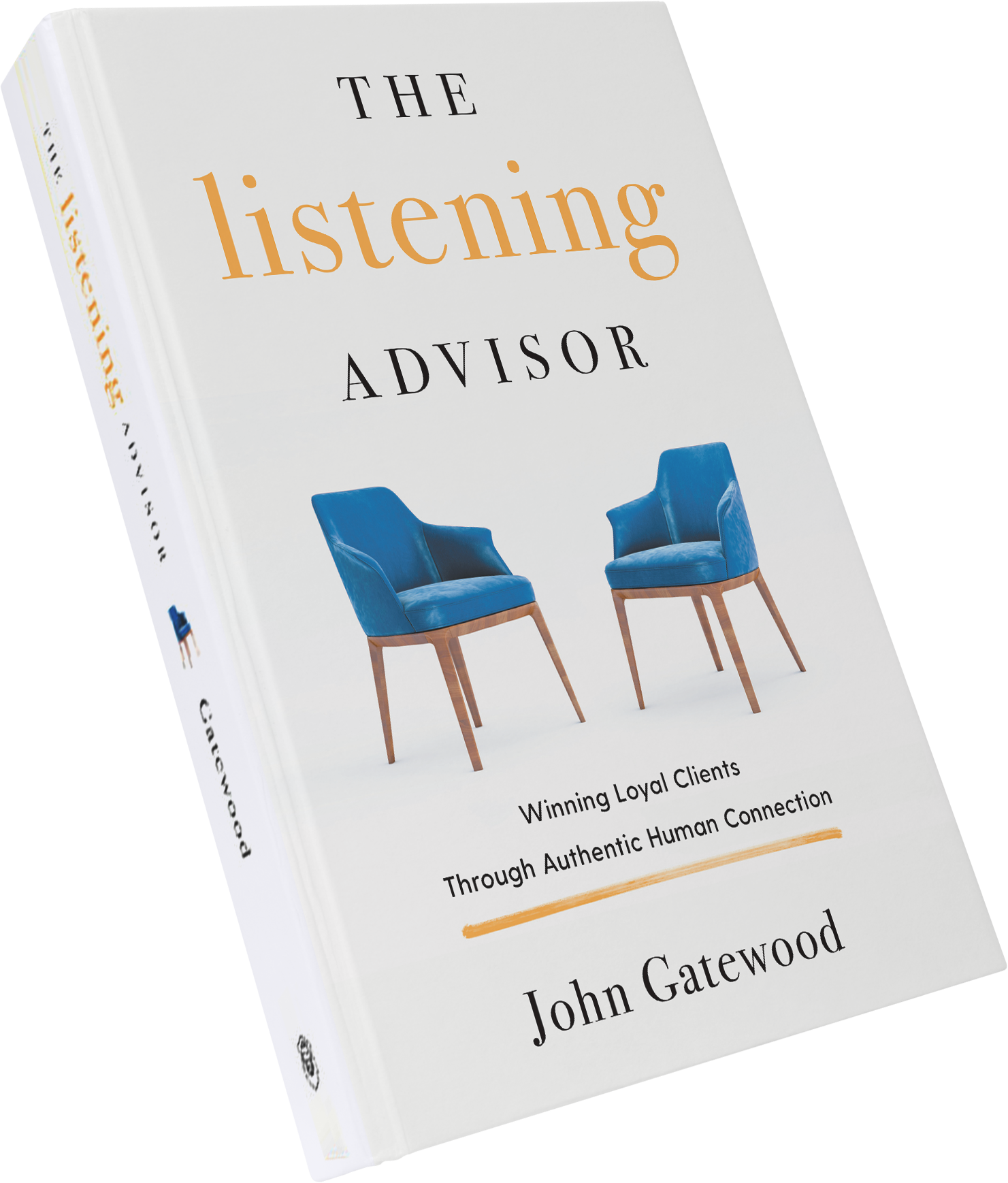
For a long time in my career, I had a sense of what that work looked like, but I couldn’t have written it down. I built a Barron’s Top 1,200 practice on intuition, observation, and the slow accumulation of habits I knew worked but couldn’t fully explain. The Listening Advisor™ is the result of years of trying to make that work visible, drawing the map, and naming the behaviors that separate advisors clients refuse to leave from advisors clients quietly drift away from.
The map turned out to be more specific than I would’ve guessed. Two dimensions, nine behaviors, together forming the architecture of a practice that grows on its own. Here’s what each one measures.
Dimension One. Communication Mastery
Communication mastery is the work that happens inside a meeting. It’s everything that determines whether the client leaves the room feeling heard, understood, and ready to act, and it’s made up of five behaviors that must work together.
Presence and Listening. Full attention, intentional silence, noticing what’s unspoken, and the ratio of speaking to listening, which is the single most measured and most misunderstood behavior in this profession. The data on this is consistent. Advisors talk more than they think they do, and the gap between what they believe and what actually happens is the first place real growth lives.
Questions and Discovery. Open-ended questions that invite reflection, picking up on what the client says and following it even when it takes the meeting somewhere you didn’t plan, and clarifying before responding instead of jumping to advice. The quality of an advisor’s questions is one of the strongest predictors of how deep the relationship will eventually go.
Empathy and Emotional Awareness. Acknowledging the feeling before offering the solution, reading the room and adjusting when something’s off, and handling pushback with grace instead of defensiveness. This is the work that lets a client feel safe enough to tell you the truth, which is the foundation of any plan that will actually be executed.
Clarity and Recommendations. Decisive recommendations tied to what the client said matters most, plain language instead of jargon, and introducing new perspectives the client hadn’t considered. This is where the advisor becomes useful, not just present, and where clarity and conviction move a client from understanding to acting.
Meeting Structure. Purposeful openings that confirm what the client wants from the time, a clear close that names who’ll do what and when, and the discipline of running every meeting like it matters, because every meeting does.
Those five behaviors together are the inside game of the client relationship. They’re also the behaviors almost no advisor training measures or coaches in any serious way, which is part of why the gap between the best advisors and the average ones is so wide.
Dimension Two. Connection and Growth Outcomes
The second dimension is the outside game. The four behaviors here are about what communication mastery produces over time, in the world beyond the meeting itself.
Referral Conversations. Confidence in asking, the quality and specificity of the ask rather than just the frequency, and the unsolicited referrals that arrive on their own from clients who’ve had an experience worth talking about. Referrals aren’t a separate skill from communication. They’re what communication mastery produces when it’s sustained over years.
Opportunity Identification. Proactively raising financial opportunities the client hasn’t yet brought up, recognizing the life moments where clients are ready to act, and being there at the moment of openness. Establishing clear next steps so the work moves forward instead of stalling is what turns a static client relationship into a growing one.
Advocacy and Retention. Whether clients would fight to keep you when their loyalty is tested by markets, fees, or a competitor’s outreach, how they respond when the portfolio drops thirty percent, and whether they actively tell other people about you on their own without being prompted. Advocacy is the strongest signal in the entire framework, because it tells you what the client really thinks when you’re not in the room.
Authentic Connection. Knowing clients as people, not just as accounts. Their family, what worries them, what they hope for outside of money, and carrying their story between meetings so that when you see them six months later, you remember where the conversation last left off. This is the difference between trust and satisfaction, and between a client who stays for life and a client who’s one good pitch away from leaving.
Those four behaviors are what communication mastery is for. They’re the measurable outcomes of doing the inside work consistently, over years, with intention.
Why the Architecture Matters
The reason this matters is that it makes the work visible. For the first time in your career, you can look at your practice not as a single blurry image of how I’m doing, but as nine specific behaviors that can be measured, coached, and improved one at a time.
That shifts the conversation an advisor has with themselves. Instead of am I good at this, the question becomes which of the nine am I strongest in, and which of the nine is the next place where focused work would change my outcomes. That’s a far more useful question, and it’s the one The Listening Advisor is built to help advisors answer.
It also reframes what the relationship with the client is for. The nine behaviors aren’t a checklist to perform during meetings. They’re habits to develop in yourself, slowly, over time, so the client experience naturally improves as the advisor improves. The advisor changes first, the practice changes second, and the numbers change third.
Where to Start
If the nine behaviors raised something in you while you were reading, that’s the place to start. Not all of them at once. One. The one where the honest internal answer was the most uncomfortable.
The free Self-Assessment on the website measures all nine in detail, places you on a map of four advisor profiles based on your scores across the two dimensions and tells you where the highest-leverage growth in your practice currently lives. The whole tool was built to make this kind of self-recognition concrete and useful, and it’s the natural next step for any advisor ready to see the work clearly.
The book is the next step after the assessment. It walks through each of the nine behaviors in depth, with the language, the examples, and the frameworks that let an advisor actually develop them in their own practice. It’s not a quick read, it’s the result of forty-five years of work, and it asks something real of the reader. The advisors who do that work change. The ones who don’t, don’t.
One Final Thing
The reason I wrote this book and built the framework was simple. The skills that determine whether an advisor builds a great practice are knowable, learnable, and measurable. They always have been. The industry just hasn’t named them clearly enough, or taught them seriously enough, to give advisors a real chance at developing them.
That’s what The Listening Advisor™ is built to change. The map exists now, the behaviors are named, the measurement is available, and what happens next is up to each advisor who chooses to do the work.
Where do you stand on the nine?
That’s the only question that matters now. Take twenty minutes with the free Self-Assessment at thelisteningadvisor.com, and you’ll have your honest answer. You’ll see which of the four advisor profiles you’re operating in today, which of the nine behaviors are your strengths, and which one is the highest-leverage place to focus your work next. The Listening Advisor™ is the next step from there, the field guide to each behavior in depth, written for advisors ready to do the real work of changing the practice.