
For most of my forty-five years in this profession, my practice ran almost entirely on referrals. The mechanics of how I generated them changed over those decades, but the underlying skill that produced them never did.
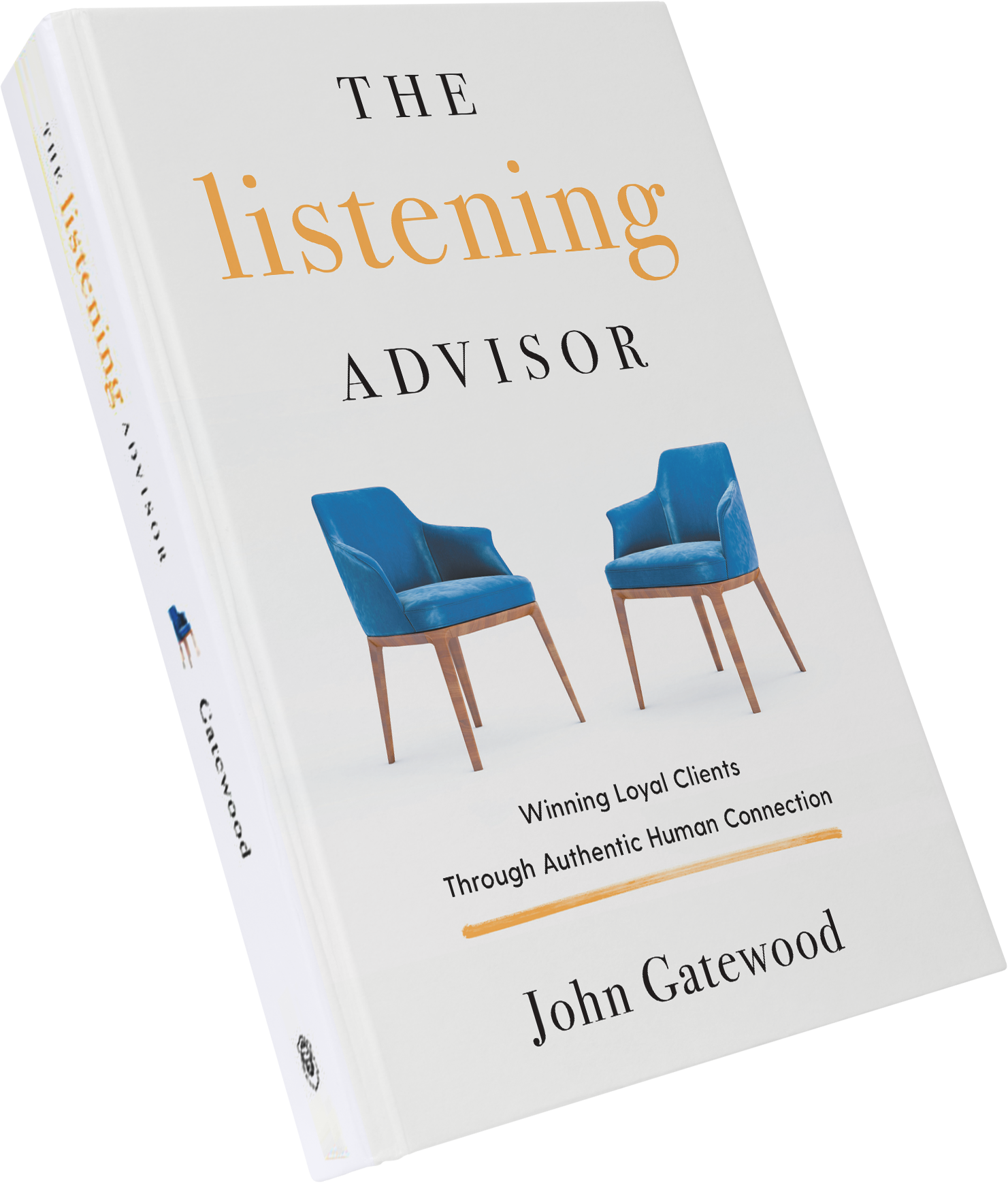
That skill is the one The Listening Advisor™ is built around. Communication mastery is the tool, authentic connection is the outcome, and authentic connection built deliberately over years is what produces a referral-driven practice that grows on its own. Here is how that played out across my career.
The Early Years. Volume Mattered Most
When I started, I needed volume. My goal was fifty referrals a month, and I was pretty consistent at hitting it. The discipline was simple. I asked at every client meeting, every prospect meeting, and every reasonable opportunity, and the question I used was the same one I’d use for the next forty years.
Who do you know that would be a great person for me to introduce myself to professionally?
Not good, but great. That word raised the bar on the kind of name a client would think to share, and professionally told the client this was a business conversation, not a social one. They weren’t picking out a friend for me to make small talk with. They were thinking of someone whose financial life might be worth a serious conversation.
The discipline I ran every meeting had three steps in this order. Ask. Feed a name. Who else.
I always asked the open question first. But I quickly learned what tended to happen next, which was that the client would pause and say a version of I don’t really know anyone looking for a financial advisor. The question was too open and their mind went blank.
So I started preparing differently. Before each client meeting, I’d do my homework on who that person actually knew. Their professional network, who they worked with, who they served alongside on boards, who their golf friends were. Then, after I’d asked the open question and it stalled, I’d feed a name.
I wonder, who do you know that would be a great person for me to meet professionally? I noticed you’re friends with so-and-so. Would he or she be a great person for me to meet professionally?
That changed the conversation entirely. The client wasn’t searching their whole memory anymore. They were reacting to one specific person, which is a far easier task, and the hit rate on getting an introduction went up significantly.
Then, once they gave me a name, I’d ask the third question. Who else do you think would be a great person for me to meet? If I had more names from my research, I’d feed those too. Three steps. Ask, feed a name, who else.
This is the rule I lived by for forty-five years. Don’t ask, don’t get. Ask every meeting, every time, no exceptions. The repetition does something more important than producing names in any individual meeting. It trains the client to be looking for you when they are not in the room.
Why the Volume Game Had a Ceiling
The volume game worked, but after a while I started to notice its limit. The issue is something almost no referral training talks about. People change financial advisors only once, twice, maybe three times in their entire lifetime. That’s it. Which means that out of all the names a client gave me, the vast majority were people who were not currently in the market for a new advisor. They weren’t unhappy, they weren’t questioning, they weren’t open. They were busy living their lives, satisfied with the advisor they already had.
I still got new clients out of those meetings, and I did well. But the labor was inefficient because most of the work was meeting good people at the wrong moment.
What I needed was a way to find people at the moment they were truly open to a conversation, and that moment isn’t random. It’s clustered around specific life events. Retirement. A business sale. An inheritance. A new job or promotion. A bonus year. A vested stock window. A divorce. The death of a parent or spouse. Those moments are when people look up from their financial life and ask the question, is this still working for me? That’s the moment a new advisor has a chance, and outside of those moments, the chance is much smaller.
So the question shifted. Instead of just who do you know, I started asking something more specific.
Who do you know who’s approaching retirement, has changed jobs, received an inheritance, is thinking about selling his business, or is experiencing some other major life event right now?
That question produced a completely different conversation. Clients weren’t scanning their memory for any name, they were scanning for a situation. The names that came back were people genuinely at a moment of openness, and the conversion rate moved by a meaningful multiple. The labor became efficient.
Why High-Net-Worth Referrals Require Something Different
As my practice grew, and especially as I started working with higher levels of wealth and professional standing, even the life-event question stopped being enough.
The reason is simple. The higher up the wealth and professional ladder, a phone number and a name-drop aren’t enough to get a meeting. Hi, your friend Bob gave me your name and suggested I call gets you politely declined more often than it gets you a meeting, because people at that level get those calls all the time and the credibility transfer just isn’t strong enough.
What it takes at that level is something different. The referring person has to make the introduction themselves, picking up the phone, writing the email, or setting up the meeting. They have to put their name and their relationship behind you, which is a different ask of a client and requires a much deeper level of trust.
That deeper trust is not built by asking better or more often. It’s built by years of conversations where the client genuinely felt understood, not processed. It’s built by the kinds of small moments I write about in The Listening Advisor. The follow-up question about their daughter’s college search three meetings later. Remembering the exact words a client used to describe what mattered to them, and using those same words back to them in a recommendation later. The silence I held when they were thinking through something hard. The moment I said out loud what they were feeling before I moved to advice.
Those moments are the work. They don’t feel like business development when they’re happening, but they are. They are the only thing that produces the level of trust required to get a personal introduction from a client at the top of the wealth ladder.
Once a client felt that level of connection with me, two things changed. First, they were willing to make a real introduction, not just hand off a name. Second, and this was the most valuable shift of all, they started listening for me in their own world. They knew when their friend was going through one of the life events that opens someone up to considering a new advisor, because they were paying attention to that friend’s life, and when the moment came, they reached out to me on their own to make the introduction.
The connection with the client was what motivated them to speak to their friend about me. Without that connection, they wouldn’t have known their friend’s situation in that depth, and they wouldn’t have felt strongly enough about me to act on it. The deeper the connection, the better the antenna for the people I most wanted to meet.
Where the Unsolicited Referrals Came From
The unsolicited referrals, the ones I never asked for who were highly qualified to become clients, came in the later years and they came from this same place.
A client would call me out of the blue and say, I have to introduce you to someone. A friend I’d never met would reach out because my client wouldn’t stop talking about me. A family member I didn’t know existed would call to set up a meeting because the client had told them they had to work with me. Those didn’t come from listening. They came from the authentic connection that listening had built over years.
This is one of the principles from the book I come back to most often. Listening is the tool, connection is the outcome, and connection is what produces an advocate. A client who feels deeply understood will eventually start saying so out loud, for the rest of their life, to the people they care about. You can’t ask for that, you can only earn it.
The Exercise. Match the Question to the Stage You’re In
The most useful thing I can give you for your own practice is to know what game you’re playing right now and use the version of the ask that matches it.
If you’re early in your career and you need volume, structure your asking around the three-step discipline. Ask the open question first. Feed a researched name when it stalls. Then ask who else. Run it every meeting, with the don’t ask, don’t get rule as your foundation.
If you’re trying to find people at the right moment, shift the question. Ask about the life events when people are typically open to considering a new advisor, like retirement, selling a business, receiving an inheritance, a job change, a bonus or equity event, or the death of a parent. The names that come back will be people genuinely open to meet, and the labor of your business development becomes far more efficient.
If you’re working with established or high-net-worth clients, the game is different again. The introductions you want require the client to make them personally, which means investing the time it takes to build genuine connection over years, not pursuing referrals one meeting at a time. The asking still happens, but the connection is what does the real work. The exercise here isn’t a script. It’s the harder discipline the rest of The Listening Advisor teaches.
In every stage, train your clients to listen for you. Walk them through the life moments and ask them to remember you when they’re with a friend, colleague, or family member going through one of those moments. You’re not asking for a name in that meeting. You’re training them to think of you, on their own, when the moment arrives in their world.
One Final Thing
Looking back at the practice I built, the referrals are the part I’m most proud of. Not just because of the volume, although the volume mattered enormously in the early years, but because of what the later referrals represented. Clients who introduced their friends to me personally, on their own timing, at the exact moment their friend was open to a new conversation. Every one of those introductions was a client deciding that someone they cared about should know me, and the connection had become deep enough that they had to say it out loud, unprompted, to the people they loved.
That is what The Listening Advisor is built to produce. Communication mastery, applied consistently over years. Authentic connection, built one meeting at a time. And a practice that eventually grows on its own, because the clients are doing the introducing for you.
If this is the question on your mind right now, The Listening Advisor™ is the book built around it. The free Self-Assessment at thelisteningadvisor.com will show you which of the four advisor profiles you’re operating in today, and where the highest-leverage growth in your practice lives.