
A client sits across from you and admits they pulled fifty thousand dollars out of their 401(k) to rescue their son’s failing business. You know instantly what that decision will cost them in taxes and lost compounding, and before you can stop it, your eyebrow lifts and your head tilts a fraction of an inch. You haven’t said a word, but you’ve already said everything. The client saw it, and somewhere in their mind a small door quietly closed. That door was the next ten things they were going to tell you, and now they never will.
Over a career that included building and running my own firm before selling it in 2021, and years as a top-ten advisor at LPL, I came to believe that one raised eyebrow costs you ten future truths. The skill that separates good advisors from great ones isn’t knowing more. It’s managing your own reaction in the half-second after a client confesses something they’re ashamed of, because that half-second decides whether they ever tell you the truth again.
The Math of a Single Reaction
Let me show you why that closed door is so expensive. Picture two advisors hearing the same confession about that 401(k) withdrawal. The first responds with a slight headshake and “You took fifty thousand from your retirement? Well, we need to talk about the tax implications of that.” The message the client receives is unmistakable: you were foolish, I’m disappointed, and I would never have done that. The second advisor keeps a neutral face and says, “Tell me about what led to that decision.” The client relaxes and explains that the business was about to collapse and they couldn’t bear to watch their son lose everything without trying to help. A follow-up question, “What were you hoping would happen?” draws out the real truth: they were terrified their son would resent them forever if they didn’t step in.
Now the second advisor understands something the first one never will. This wasn’t financial illiteracy, it was a parent choosing their relationship with their child over their retirement timeline, a decision that lines up perfectly with their values even if it doesn’t line up with a spreadsheet. The first advisor lost that understanding the instant judgment shut the conversation down. The second advisor got the whole picture because curiosity replaced criticism. Same confession, same numbers, completely different relationship from that point forward.
One raised eyebrow costs you ten future truths.
John Gatewood
Why Clients Hide, and What It’s Really Costing You
If you think your clients tell you everything, the research suggests otherwise. Securian Financial surveyed 720 people who work with financial advisors and found that nearly a third, 29 percent, admitted they hadn’t been completely honest about things that could affect their finances. About one in four carried debt their advisor knew nothing about. Here’s the part that should reshape how you sit in every meeting: of the clients who withheld, only 11 percent said it was because they didn’t trust their advisor. The rest held back for a different reason entirely, and that reason is almost always embarrassment, the fear of being judged.
That distinction matters enormously, because it means the silence isn’t about your competence or your character. It’s about how safe the client feels being honest with you, and that safety is something you create or destroy in small moments, often without realizing it. Judgment rarely arrives as a lecture. It leaks out through a raised eyebrow, a pursed lip, a heavy sigh, a surprised “You did what?”, or a pause that stretches a beat too long after a confession. The client reads every one of those signals, and once judgment registers, they start editing. They sanitize their spending, downplay their fears, and hide the next mistake, and you end up building a meticulous plan on a foundation of half-truths.
Think of it like a patient who hides symptoms from their doctor because they’re embarrassed about how much they drink or that they stopped taking a medication. The doctor runs the tests, reads the charts, and writes a perfectly reasonable treatment plan that misses the real problem entirely, because the doctor never had the full picture. Your financial plan fails the same way when a client hides the two thousand dollars a month going to a struggling adult child, or the credit card debt they’ve kept from their spouse. The plan looks excellent on paper and is useless in practice.
Curiosity Is the Cure
The alternative to judgment isn’t fake enthusiasm or pretending bad decisions are good ones. It’s curiosity, and curiosity is less a technique than a posture. Think about how you respond when a close friend tells you they made a questionable choice. Your instinct isn’t to lecture them. You want to understand what happened, what they were thinking, and what led to the decision. You ask because you care and you want to see it through their eyes before offering a single opinion. Now think about how the instinct flips when your teenager makes the same questionable choice. Suddenly you want to correct and teach and prevent it from happening again. But every parent eventually learns the hard lesson here: the teenager who gets curiosity keeps talking to you, and the teenager who gets judgment stops sharing. Your clients are no different.
Curiosity looks like leaning forward instead of leaning back, and it sounds like “Tell me more” instead of “You shouldn’t have.” Every judgmental response has a curious twin. Instead of “You should have called me before taking that withdrawal,” try “Help me understand what was happening that made that feel like the right choice at the time.” Instead of “Why would you buy that without researching it,” try “Walk me through how you made that decision. What appealed to you about it?” The information you get is identical, but one version makes the client defend themselves while the other invites them to open up. Replace evaluation with exploration, and criticism with understanding.
The Six Words That Keep Clients Honest
There’s one tool from The Listening Advisor that I reach for whenever a client shares something they’re embarrassed about, and it’s only six words: “Thank you for telling me that.” It’s simple, direct, and impossible to misread as judgment. When a client admits they’re drowning in credit card debt they’ve hidden from their spouse, you say, “Thank you for telling me that. I know that wasn’t easy to share.” When they confess they’ve been taking investment tips from an unqualified neighbor, you say, “Thank you for telling me. That helps me understand your situation better.” Every version communicates the same three things: you can be honest with me, I won’t judge you, and together we’ll figure this out.
Those six words do something powerful. They reward the honesty instead of punishing it, which makes the next honest disclosure more likely, not less. Over time, the clients who hear those words stop giving you the sanitized version of their lives and start giving you the messy truth, and the messy truth is the only thing you can actually build a real plan around.
Where AI Can’t Follow
This is one more place where the human advisor stays irreplaceable in a world racing to automate. AI can analyze a portfolio, model a retirement projection, and draft a flawless summary, but it cannot sit across from a frightened parent, catch the shame in their voice, hold its expression steady, and respond with the warmth that makes a person feel safe enough to tell the truth. A model never has to resist the urge to raise an eyebrow. It also never earns the trust that the raised eyebrow would have destroyed. That trust, the kind that makes a client confide the thing they’ve told no one else, is built in deeply human moments that no technology will ever reach.

Your One Takeaway This Week: “Thank You for Telling Me That”
In your next client meeting, when someone admits a mistake or shares something they’re clearly embarrassed about, resist every instinct to react, correct, or teach in that first moment. Instead, say six words: “Thank you for telling me that.” Keep your face neutral, your tone warm, and then ask, “Tell me about what led to that.” Watch what happens to the rest of the conversation. You’ll find that rewarding honesty in the moment opens doors you didn’t even know were closed.
The Bottom Line
Suspending judgment doesn’t mean avoiding hard truths. If a client is heading toward real trouble, you must name it, but there’s a world of difference between “You’re going to ruin your retirement if you keep this up,” which attacks the person, and “I want to make sure you understand the long-term impact of this pattern,” which presents the facts and leaves them their dignity. State facts, not verdicts. The client who feels informed will hear you. The client who feels judged will spend their energy defending themselves and hide the next thing that matters.
Guard your eyebrows, reward the honesty, and you become the rare advisor clients trust with the whole truth, the one they refer, advocate for, and never leave.
Ready to become the advisor no machine can replace?
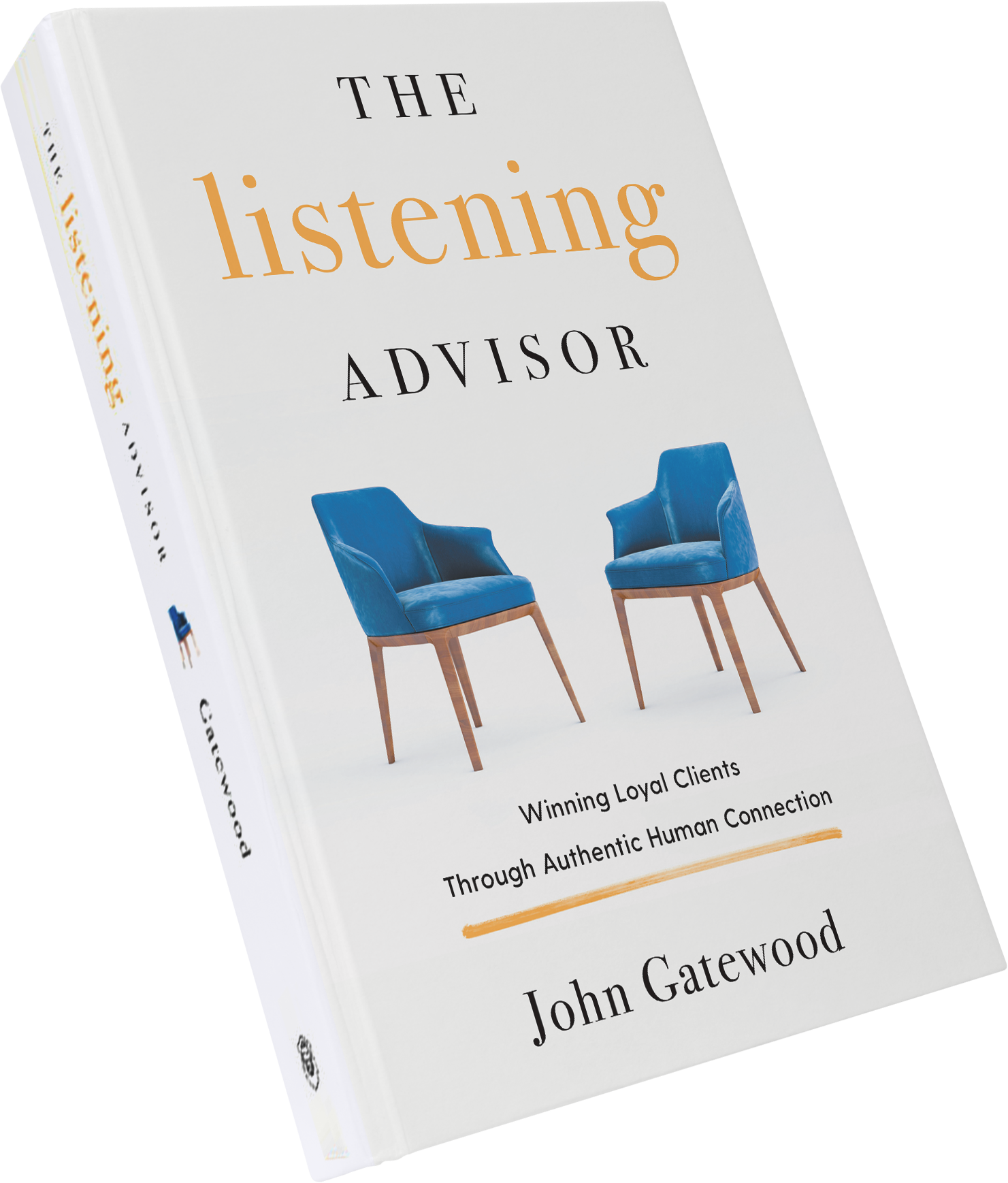
Pick up a copy of The Listening Advisor, or reach out to learn how The Listening Advisor™ can help you grow your AUM, deepen client relationships, and win clients who refer, advocate, and never leave.
John Gatewood is a CERTIFIED FINANCIAL PLANNER™ professional with forty-five years in financial services and the author of The Listening Advisor: Winning Loyal Clients Through Authentic Human Connection.