I’ve spent forty-five years in this business, and I can tell you that the silence you’re rushing to fill is often the single most valuable moment in the meeting. Learning to read it, and to hold it, is one of the skills that separates an advisor clients merely tolerate from one they’ll never leave.
The Gap Between What You Think You Do and What You Actually Do
Start with a number that should stop every advisor cold. Analysis of nearly ten thousand recorded advisor-client meetings by Jump AI found that advisors spoke more than their clients in 84 percent of them, and here’s the part that stings: 87 percent of advisors believed the opposite was true. We think we’re listening, the recordings say we’re talking, and that gap between perception and reality is where good relationships quietly go to die.
The sales world has measured the same thing from a different angle. Gong’s analysis of more than one hundred thousand recorded conversations found that top performers land near a 43 percent talking to 57 percent listening ratio, while the conversations that fall apart drift toward the speaker dominating the room. The single most effective habit Gong identified was almost comically simple, which is that after the other person finishes, you pause for two seconds before you respond. Two seconds feels like an eternity when you’re the one holding it, but to the client it feels like room to breathe.
We think we’re listening. The recordings say we’re talking. That gap is where good relationships quietly go to die.
Silence Is Not a Gap. It Is Thinking Happening in Real Time.
Here’s the reframe that should reshape how you sit in a meeting. When a client pauses, they’re not stuck, they’re working. They’re searching for the right words, deciding whether to share something vulnerable, connecting one concern to another, or processing an emotion before they can put it into language, and all of that takes time. The silence isn’t empty space for you to manage, it’s the answer being built, right in front of you, and your job is to avoid knocking it over.
Think of it like a Polaroid developing. You can see something is forming, but if you grab it and start wiping at it to speed things up, you ruin the image, and the client’s real answer works the same way. It needs a few unhurried seconds of quiet to come into focus, and if you reach in too soon you smear it into the easy, rehearsed answer instead.
That distinction between rehearsed and real is the whole game. A therapist taught me something years ago that reshaped how I run every meeting, which is that the first answer people give is usually the one they’ve rehearsed, the one they think they’re supposed to say, while the real answer comes after the silence, once they’ve moved past the automatic response. Ask a couple what matters most about their legacy and the first answer is tidy, something like “leaving money to our kids.” Wait through the pause, though, and the truer answer arrives: “Making sure our kids don’t fight over it the way we watched our siblings fight over our parents’ estate.” Same question, completely different answer, and only one of them tells you what you need to know.
Thirteen Seconds That Changed a Client’s Entire Plan
Let me show you what this looks like when you get it right. Years ago I was working with a business owner on his retirement plan, a man who, with his brother, had built a moving company franchise into a regional powerhouse and even created a call center that served other franchisees. By every measure they had won, and so I asked what I thought was a routine question, which was what his thinking was on the timeline for stepping back from the business.
He opened his mouth, then closed it, and the silence stretched. I had to consciously stop myself from filling it, not once but two or three times, while he looked at his hands and his wife glanced at him and then back at me. I caught myself glancing at my watch. Thirteen seconds had passed, and he still hadn’t spoken. Then he did. “I’ve been wanting to sell for three years, but my brother is my partner, and he’s not ready. I can’t figure out how to have that conversation without destroying our relationship. I wake up every morning dreading going to work, and I don’t see a way out.”
That pause surfaced the real issue, the one that had been silently blocking his entire retirement plan. If I’d jumped in at second three with “Are you thinking next year, or five years out?” I would have gotten a quick, useless answer and missed everything that mattered, and those thirteen seconds turned out to be the most important moment of our entire relationship.
I wish I could tell you I always get it right, but I don’t. I once asked a retired couple what worried them most, felt the pause coming, and rescued myself by rattling off a multiple-choice list of options. The husband latched onto the easiest one, healthcare costs, and we had a perfectly professional conversation about the wrong thing. Two months later they left for another advisor, and the wife told me, kindly, that they never felt I understood what they were worried about, because the new advisor asked and then simply listened. I’d asked the right question and refused to wait for the real answer. That one still stings, and it’s exactly why I teach this.
How to Read the Signals
Most pauses in your meetings are short, and a brief Listening Pause is all they need, because you ask, the client gathers their thoughts, and the answer arrives. But some questions land somewhere the client has never rehearsed, somewhere they’ve been avoiding or are working out for the first time, and those pauses need to stretch. The good news is that the signal to wait longer is almost always visible if you’re watching for it.
Watch for the client who opens their mouth and then closes it, for the eyes that drift away from yours toward the window or the floor, for the small change in the face, the shift in posture, the spouse who glances over before deciding whether to speak. These aren’t signs of confusion or that your question missed, they’re the cues that tell you a thought is forming. The client is mid-assembly, and your interruption in that moment wouldn’t merely slow them down, it would stop the thought from forming at all.
Quick responses are usually the rehearsed ones. Slow responses are usually the real ones.
Where AI Fits, and Where It Cannot
This is also where the human advisor pulls decisively ahead of the technology racing into our industry. AI can transcribe a meeting flawlessly, and it can summarize, project, and draft, and used well it can even help, capturing notes so you’re free to be fully present, or powering a pre-meeting questionnaire that lets clients disclose in writing what they might be too embarrassed to say out loud. Those are real gifts, and the digitally fluent advisor uses them.
What no model can do, though, is sit across a table from a frightened human being, feel the weight of a thirteen-second silence, read the glance between spouses, and understand that the most important thing in the room is the sentence that hasn’t been said yet. That perception is a human act, the one part of your work that can’t be automated, and in a world racing to automate everything, it’s becoming the most valuable thing you do.
Why This Protects Your Practice
If the human case isn’t enough, consider the business case. Roughly 72 percent of clients who fired an advisor cited a failure to communicate as the reason, according to a widely referenced Financial Advisor magazine survey, and a study from the MIT AgeLab and AIG found that about a quarter of clients would leave over a lack of personal connection. Notice what’s missing from those reasons. Not performance, not fees, but connection and communication. Clients stay because of how you make them feel, and what they want most is to feel heard and understood, so silence, held well, becomes one of the most powerful ways you ever give them that feeling.
Your Action Step This Week: The Three-Meeting Challenge
In your next three client meetings, ask one important question and then hold the Listening Pause longer than feels comfortable, and when the urge to rescue the client with options rises, don’t give in to it. If you want to make the silence a gift rather than a test, use three words: “Take your time.” That phrase normalizes the pause, gives the client permission to think, and conveniently keeps you from talking. After each meeting, name one moment where the silence you held delivered something you wouldn’t have gotten any other way. That’s the muscle, so train it, and watch what your clients start telling you.
The Bottom Line
Communication mastery isn’t one silver bullet, it’s everything in aggregate, and the willingness to sit in silence is one of the hardest pieces to master because every instinct you have screams at you to fill it. Resist that instinct, because the client across from you isn’t waiting for you to talk. They’re working their way toward the truth, and the only thing they need from you in that moment is the patience to let it arrive.
Be the advisor who asks meaningful questions and then has the confidence to wait for meaningful answers. That is how you win clients who refer, advocate, and never leave.
Ready to become the advisor no machine can replace?
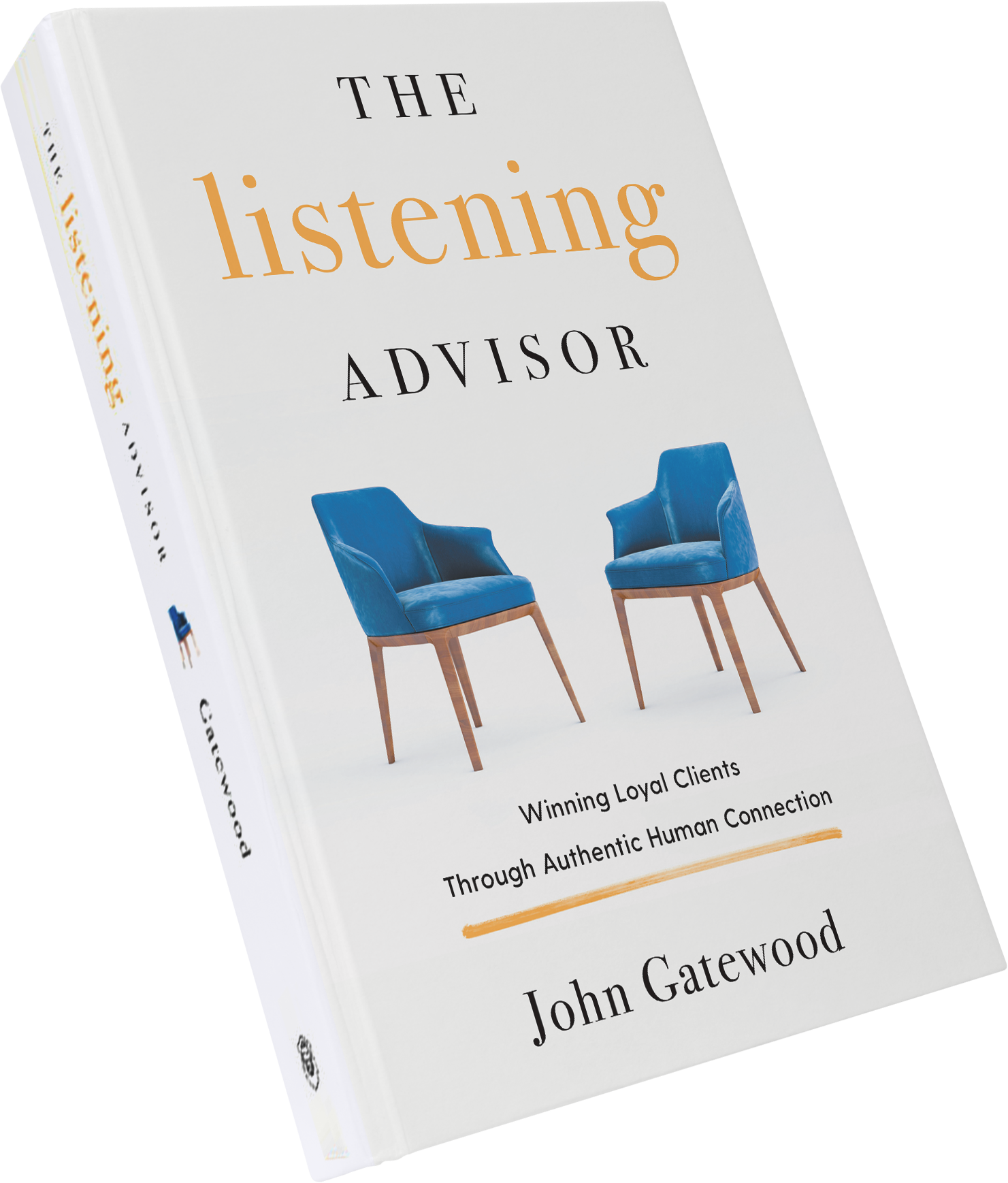
Pick up a copy of The Listening Advisor, or reach out to learn how The Listening Advisor™ can help you grow your AUM, deepen client relationships, and win clients who refer, advocate, and never leave.
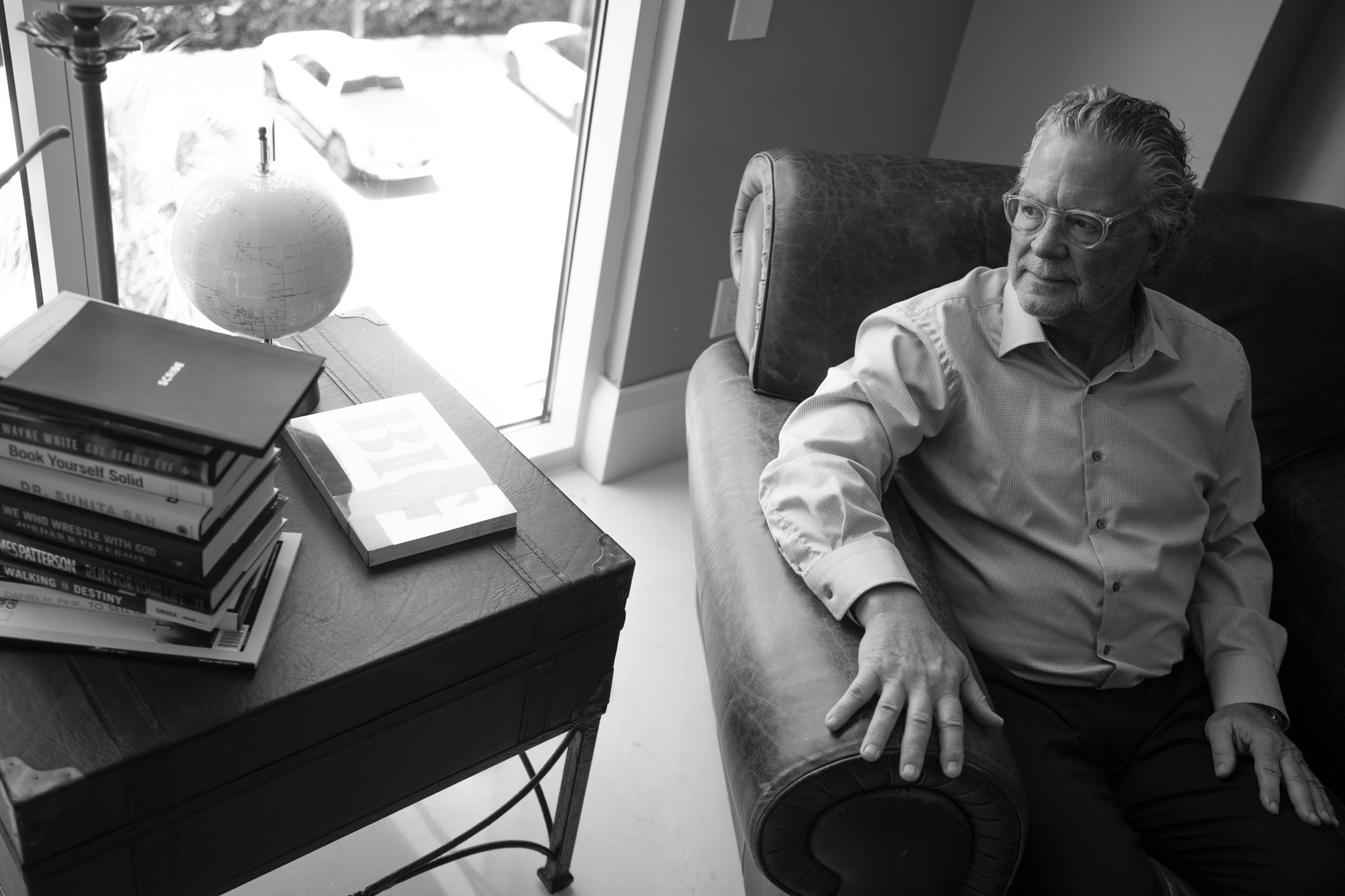
John Gatewood is a CERTIFIED FINANCIAL PLANNER™ professional with forty-five years in financial services and the author of The Listening Advisor: Winning Loyal Clients Through Authentic Human Connection.